
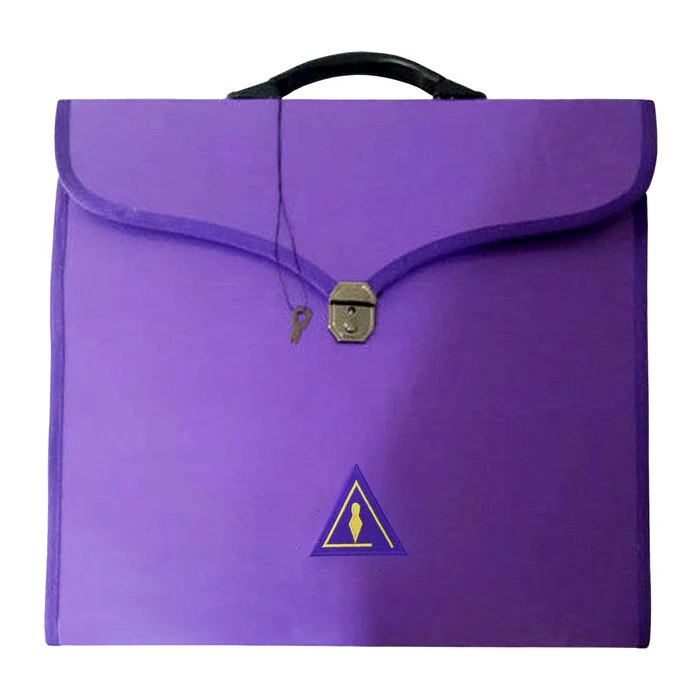

An apron case protects the badge between the house, the car, and another lodge. It is not headwear storage and it is not a chain-collar bag. Those are separate categories. Start in Apron Cases with the apron on the table in front of you. Lodge rules do not usually specify the case, but they do specify the apron, so the case must not force you to fold the badge in a way that cracks the embroidery.
Measure the apron, then the case
Fold the apron the way you are willing to travel with it. Measure length, width, and thickness, including fringe if you refuse to crush the fringe. Compare those numbers with the case listing. A case sold for a plain Master Mason apron can be too tight for a heavily fringed officer apron or a full-dress apron with a bulky flap.
If you own more than one apron, decide whether one case must hold both. Two thin aprons can share a case. A dress apron and a spare funeral apron should not share one if the lodge funeral set is supposed to stay at the temple.
Hard shape or soft bag
A structured case keeps embroidery flatter and is the better default for bullion or hand embroidery. A soft case is lighter and easier in a suitcase, and it is reasonable for a plain cloth apron. Listings on this site include full-dress and provincial-style cases as well as simpler ones. Read the material line. “Leather” and “synthetic leather” are not the same claim, and only the listing’s wording counts.
Colour and a small emblem help you pick your case off a crowded tyler’s table. They do not protect the apron. If the budget is limited, spend it on fit and structure first.
Questions before you order
Will a fez case do? No. Use headwear cases for a fez or cap. The opening and the padding are different.
Should the lodge buy cases for every officer? Only if the aprons travel. Temple aprons that never leave the building need a cupboard more than twenty cases.
Can the emblem be the lodge name? Yes, if you send the spelling through the custom order form. Check that spelling on the photo sent before dispatch.